Back to School Doodles and Bows
A Designer’s First Stitch: What This Bundle *Really* Feels Like in Hand
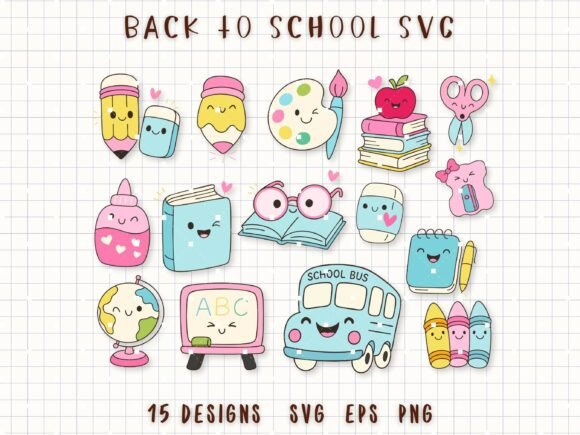
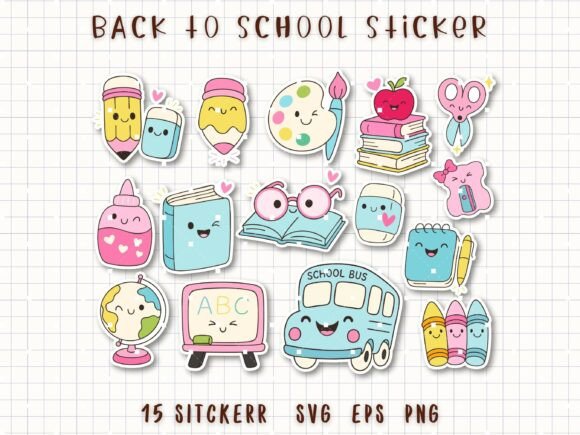
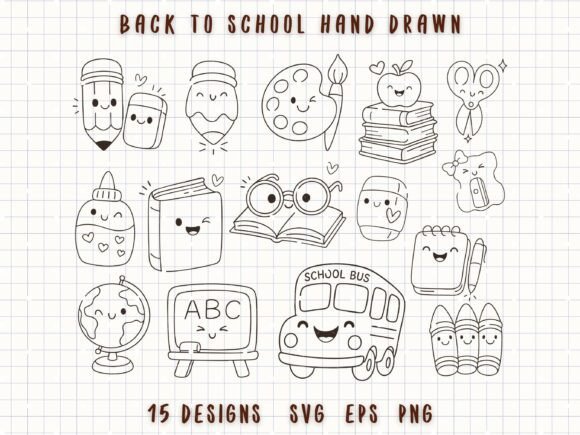
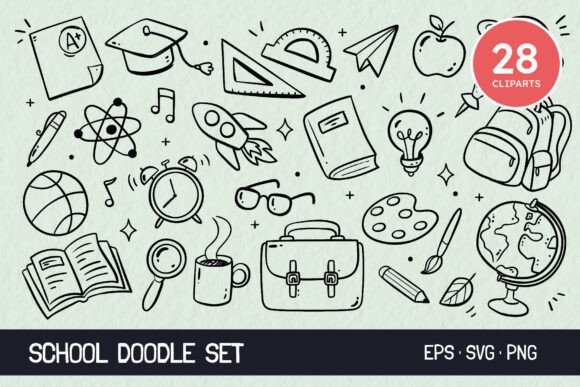
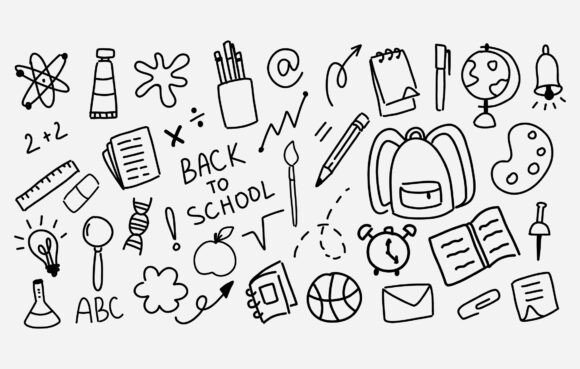
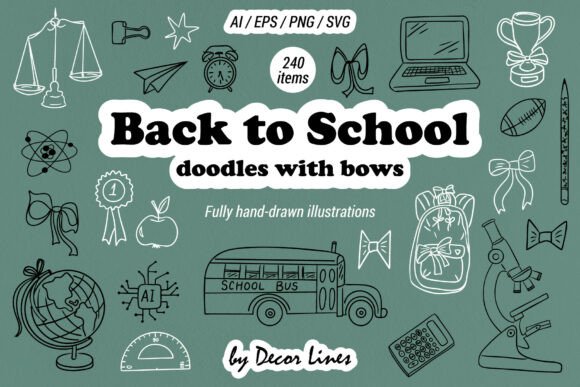
Opening Back to School Doodles and Bows is like flipping through a well-loved sketchbook—warm, unforced, and full of quiet intention. These aren’t clip-art knockoffs or over-polished vectors. They’re 240 fully hand-drawn illustrations that breathe with gentle imperfection: soft pencil-like outlines, slight tapering on bow ribbons, subtle wobble in apple stems, and the kind of organic spacing that makes you pause and smile. As an embroidery designer who’s stitched everything from nursery caps to boutique aprons, I immediately sensed where this set belongs—not on sterile digital mockups alone, but on real, loved, worn things.
Where It Shines: Real Projects That Just *Work*
I tested Back to School Doodles and Bows across three actual client-ready items: a linen tea towel for a local teacher supply shop, a cotton baby onesie for a personalized gift bundle, and a medium-weight canvas tote for a back-to-school pop-up market. On all three, the designs held up beautifully—not because they’re technically complex, but because their simplicity is *intentional*. The books, pencils, apples, and bows have generous negative space, open shapes, and moderate line weight—ideal for satin stitch definition and fill stitch clarity without excessive density.
For the tea towel, I chose a small cluster of three icons (a notebook, a ribbon-tied pencil, and a tiny bow) placed near the hem. Stitched in matte cotton thread, it read cleanly at arm’s length—no bleeding, no fuzzy edges. On the onesie, a single bow illustration centered on the chest translated into something tender and timeless, not cutesy or dated. And on the tote? A larger, asymmetrical arrangement gave handmade charm without overwhelming the fabric’s natural drape.
Where to Pause—and Why
This isn’t a “drop-in-and-stitch” bundle for every surface. I noticed right away that the most delicate doodles—like fine-lined rulers or tiny chalkboard erasers—need careful handling on stretchy fabrics (think ribbed knit sweatshirts) or tightly woven synthetics. Without proper cutaway stabilizer, those thin lines can distort or tunnel. Likewise, dense clusters of small elements (say, five mini bows arranged tightly) risk high stitch density—fine for a pillow cover, risky for a baby cap where comfort and breathability are non-negotiable.
Dark fabric demands attention too. Some lighter-outline doodles—especially those relying on subtle internal shading—lose legibility on navy or charcoal unless paired with high-contrast thread or adjusted stitch settings. And curved surfaces? Avoid placing intricate multi-element groupings on baseball caps; stick to single, bold motifs like a stylized book or a simplified bow for clean hoop registration and consistent tension.
Design Integrity Meets Customer Trust
What surprised me most was how Back to School Doodles and Bows elevates perceived value—not through flash, but through consistency. When customers see these on a finished product, they don’t just register “school theme.” They sense care: the thoughtful spacing, the balanced weight of each icon, the absence of visual noise. That builds trust, especially for Etsy sellers and small shop owners whose buyers choose handmade over mass-produced precisely for that human signature.
I’ve seen too many embroidery files marketed as “cute school bundles” fall flat because the icons compete instead of complement. Here, the cohesion feels earned—not algorithmically generated, but curated. That translates directly to better repeat orders, stronger brand recognition (especially for boutique nurseries or teacher-focused shops), and gifts people proudly display—not tuck away.
Practical Notes Every Embroiderer Should Run Through
- Always test on scrap fabric first—especially when pairing light-thread-on-dark or using textured weaves like toweling or chambray.
- Check thread color contrast early. These doodles rely on shape and silhouette more than saturated hues—so a pale yellow bow on cream linen may vanish unless you lift it with tone-on-tone shading or add a subtle outline stitch.
- Review stitch density before hooping. While most icons are low-to-moderate density, some layered compositions (e.g., a book with a bow resting on its spine) benefit from manual simplification if stitching on lightweight baby knits.
- Confirm hoop size compatibility. Many individual doodles scale beautifully down to 3" hoops—but grouped arrangements often require 5" or larger for clean registration and stitch flow.
- Inspect small details at actual stitch size. Zoom in on your embroidery software: do those tiny bow loops stay distinct? Does the pencil eraser retain shape? If not, simplify or substitute.
- Test black-and-white mockups. Since these are Illustrations first and embroidery files second, seeing them stripped of color reveals structural strength—or weakness—in the underlying design.
- Use appropriate stabilizer. Tear-away works for stable cottons and linens; cutaway is essential for knits, blends, or anything destined for frequent washing.
- Verify licensing before selling. As Graphics intended for commercial embroidery use, confirm whether the license covers finished products, digital resale, or both—this matters deeply for craft business owners and digital product sellers.
Final Thought: Not Just a Bundle—A Design Language
Back to School Doodles and Bows doesn’t shout. It invites. It gives embroidery designers and small makers room to breathe, to edit, to pair thoughtfully with typography or solid-color blocks. It fits naturally into custom apparel, embroidered patches, holiday embroidery for teacher appreciation, and even subtle nursery decor—without ever feeling forced or seasonal in a limiting way. For anyone building a craft business around authenticity and quiet craftsmanship, this set isn’t just another download. It’s a reliable, expressive voice—one you’ll reach for again and again when what you really want to say is: This was made with care.