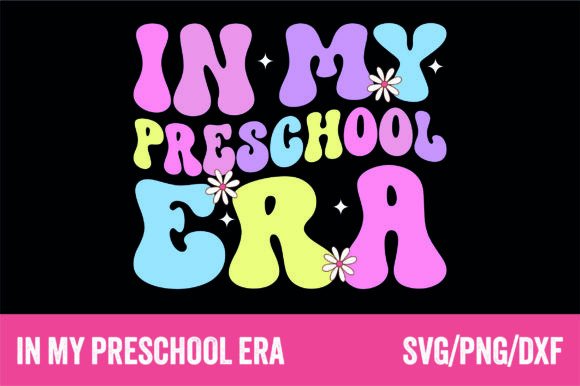
In My Preschool Era Girls Teacher SVG
As a designer who’s stitched over 2,000 custom embroidery projects—from boutique baby blankets to Etsy shop bestsellers—I opened In My Preschool Era Girls Teacher SVG expecting charm, but what stood out immediately was its quiet intentionality. This isn’t just cutesy lettering slapped onto a banner. It carries warmth, nostalgia, and a gentle confidence—like a teacher’s handwritten note tucked into a preschooler’s backpack. The layout leans slightly organic: soft curves in the “g” and “y,” subtle spacing that breathes, and a rhythm that invites slow reading rather than quick scanning. That matters—especially when you’re stitching it onto something meant to be held, gifted, or displayed.
How It Lands on Real Embroidered Products
Last week, I used In My Preschool Era Girls Teacher SVG to embroider a set of cotton twill tote bags for a local preschool’s end-of-year teacher appreciation day. We chose natural canvas with ecru thread—not flashy, but grounded. The result? Instant recognition and quiet emotion. Parents paused mid-shop to ask where we got the design. Teachers smiled before even reading the words—something about the shape and flow felt familiar, safe, celebratory without being saccharine.
It works especially well on medium-weight fabrics where stitch definition holds: sweatshirt embroidery (especially on crewnecks and raglans), embroidered patch backings, tea towels, and pillow covers. On baby embroidery—think onesies or burp cloths—the scale adapts cleanly if resized thoughtfully. As a machine embroidery design, it avoids overly tight corners or micro-details that snag or blur at small sizes. There’s no dense fill stitch blocking, no fragile satin-stitch flourishes that collapse under washing. Instead, it relies on clean line weight and intentional negative space—making it forgiving for both beginner and commercial embroidery setups.
Where to Use It Thoughtfully
That said, In My Preschool Era Girls Teacher SVG isn’t universally plug-and-play. On stretchy fabric like jersey knits, the letterforms can subtly distort unless stabilized properly—so double-layer cutaway stabilizer is non-negotiable for t-shirts or baby bodysuits. On dark fabric, test thread colors first: light ecru or soft peach reads warmly, but stark white can feel clinical against charcoal or navy. And while the design resizes easily—as advertised—it loses clarity below ~3.5 inches wide. That means skipping it for tiny cap fronts or keychain patches unless you’re willing to simplify manually.
Curved surfaces (like structured caps) require careful digitizing adjustments—this SVG wasn’t built as an embroidery file out of the box, so your digitizer will need to manage pull compensation and underlay on the curves. Also, avoid layering it directly over seams or textured weaves (like heavy linen or bouclé) without testing: those subtle letter contours may not translate evenly where the fabric dips or rises.
What It Adds to Your Handmade Product—and Your Brand
For Etsy sellers and small shop owners, In My Preschool Era Girls Teacher SVG does more than decorate—it signals empathy. It tells customers you understand the emotional weight of early education: pride, tenderness, transition. That builds trust faster than generic “Best Teacher Ever” text. When stitched cleanly, it elevates a simple tote bag from craft fair staple to keepsake-level finished product. Buyers don’t just purchase the item—they buy the feeling of being seen.
Visually, it supports brand consistency without demanding rigid color palettes. Whether you use muted sage and cream or bold coral and denim blue, the design retains its voice. It also photographs beautifully in printable mockups—no harsh shadows, no jagged edges—making digital embroidery file previews feel authentic, not generic. That’s critical when selling design assets or listing handmade products online.
Practical Designer Notes Before You Stitch
- Always test on scrap fabric first—especially if pairing with textured or blended fibers.
- Review stitch density in your embroidery software: look for areas where running stitch outlines meet fill sections—those junctions should be smooth, not overloaded.
- Confirm hoop size compatibility. While the SVG scales well, your final embroidery file must fit within your machine’s max hoop dimensions—don’t assume resizing the vector guarantees embroidery readiness.
- Inspect small details at 200% zoom: check how the lowercase “a” and “e” render, and whether inner counters stay open after digitizing.
- Test black-and-white mockups. Does it hold presence on light and dark backgrounds equally? If not, adjust thread contrast before production.
- Use appropriate stabilizer: cutaway for knits, tear-away for stable wovens, and lightweight fusible for delicate baby items.
- Verify licensing terms before selling finished products or bundling this as part of a commercial embroidery collection—SVG files aren’t automatically cleared for resale unless explicitly stated.
Final Thought: A Design That Serves Its Moment
In My Preschool Era Girls Teacher SVG doesn’t shout. It doesn’t need to. Its strength lies in resonance—not repetition. It fits naturally in the Print Templates category because it’s built for versatility, but its real value emerges in Graphics used *with purpose*: on a hand-stitched apron for a preschool art teacher, a personalized gift tag sewn onto a holiday quilt, or a small-batch run of embroidered patches for a parent-teacher association. It’s not just another graphic—it’s a quiet collaborator in storytelling. And in embroidery, where every stitch carries weight, that kind of thoughtful design is rare, useful, and deeply professional.