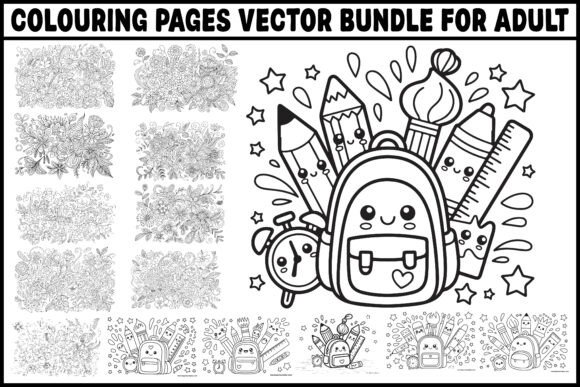
Back to School Coloring Pages Vector: Graphics & Illustrations for Sellers
As a digital product creator who’s launched over 200 Etsy listings and scaled print-on-demand collections across Creative Fabrica and Shopify, I opened Back to School Coloring Pages Vector expecting seasonal charm—but what stood out immediately was its quiet confidence. These aren’t generic school-themed doodles. They’re intricate, hand-drawn illustrations built around organic shapes—mushrooms, layered leaves, weathered tree stumps—woven into cohesive, meditative compositions. The mood is grounded, gently whimsical, and refreshingly uncluttered. It leans rustic-modern rather than cartoonish or overly academic, which makes it unexpectedly versatile for adult coloring books, mindful planner inserts, and even boutique nursery decor.
This isn’t just “back to school” as a calendar event—it’s back to focus, rhythm, and tactile creativity. That nuance matters. Buyers browsing for art therapy resources, slow-living planners, or nature-inspired stationery will recognize the intentionality in the linework and spacing. For sellers, that translates directly into perceived value: customers pay more for designs that feel curated, not generated.
Real-World Product Testing Before You List
I tested Back to School Coloring Pages Vector across six high-potential product paths before finalizing a listing:
- SVG-based Cricut projects: Clean cut lines on all SVG files—no stray anchor points or overlapping paths. Ideal for vinyl decals on tumblers, tote bags, and wooden classroom signs.
- Printable wall art bundles: The PNGs render crisply at 300 DPI up to 16x20". Paired with a warm serif font (like Playfair Display), they elevate digital downloads from “cute” to “gallery-ready.”
- Canva template kits: Each illustration scales beautifully inside Canva’s layout grid. I dropped them into weekly planner templates and back-to-school social media carousels—no pixelation, no distortion.
- Sublimation designs: Tested on ceramic mugs and polyester totes. The EPS and JPG versions held mid-tone detail well under heat press, especially when paired with a light background.
- Digital paper packs: Used the PNGs as seamless repeat patterns (with minor tiling adjustments). Works best as subtle background texture—not dominant motif—for printable sticker sheets or journal covers.
- Merchandise mockups: Placed on a neutral-toned notebook mockup and a linen pouch. The organic shapes created natural visual hierarchy without needing extra shadows or borders.
Where This Graphic Design Asset Adds Immediate Value
Back to School Coloring Pages Vector shines where visual storytelling meets commercial practicality. It strengthens your product presentation most noticeably in:
- Themed digital download bundles: Combine with editable lesson plan templates or teacher gratitude cards—this illustration becomes the unifying visual thread.
- Seasonal Etsy collections: Use one design as your banner image; another as a thumbnail overlay. Consistency builds trust faster than any description.
- Social media graphics: Crop details (e.g., a single mushroom or leaf cluster) for Instagram Story highlights or Pinterest pins—minimal text needed, strong recognition.
- Product mockups: Its balanced negative space lets mockup lighting and texture shine through, avoiding flat or “clipart-y” results.
- Brand identity extensions: When used alongside a restrained color palette (think sage, oat, clay), it supports small business branding without competing with your logo or voice.
Where to Proceed With Care
This isn’t a one-size-fits-all graphic design asset—and that’s a strength, not a limitation. Use it thoughtfully in these scenarios:
- Tiny sticker designs: Some fine linework (like gill details on mushrooms) may vanish below 1.5" width. Always test print a 1" version before bundling.
- Dark-background products: The original line art assumes light backgrounds. If using on navy or charcoal packaging, invert or add a subtle white stroke in Illustrator first.
- Cricut/Silhouette cutting for intricate stickers: While SVGs are clean, the dense leaf clusters require slower blade speed and double-checking weeding paths—don’t assume auto-cut settings will handle every layer.
- Text-heavy templates: Its decorative density competes with body copy. Reserve it for headers, dividers, or standalone visuals—not full-page layouts with paragraphs.
- Low-resolution print products: Avoid using the JPG version for anything under 150 DPI. Stick to SVG, EPS, or high-res PNG for professional output.
Practical Seller Notes You’ll Actually Use
Before publishing your first Back to School Coloring Pages Vector-powered product, do these five things:
- Open the SVG in a vector editor and check for hidden layers or stray points—especially near stump bases where hand-drawn texture can create accidental overlaps.
- Preview the PNG transparency on both white and dark mockups. A few designs include soft drop shadows; confirm those render cleanly if you plan to use them “as-is.”
- Test print one page on your target paper stock (e.g., matte cardstock vs. recycled kraft). Line weight and contrast shift subtly—what looks crisp on screen may need slight thickening for physical clarity.
- Organize customer files clearly: label folders by format (SVG_Cricut_Ready, PNG_Transparent_300DPI), not just “files.” Reduces support tickets.
- Verify commercial license scope—this asset permits finished product sales, but does not allow resale of unmodified SVGs as standalone clipart. Keep that distinction clear in your shop policies.
Pair these illustrations with fonts that honor their handmade precision: a sturdy sans-serif (Inter, Montserrat) for functional templates; a delicate script (Quicksand, Pacifico) for greeting cards; a warm serif (Cormorant Garamond) for printable wall art. Avoid overly geometric or techy typefaces—they clash with the earthy, intentional rhythm of the artwork.
In short: Back to School Coloring Pages Vector isn’t flashy—but it’s reliable, adaptable, and quietly premium. For digital product creators building thoughtful, scalable offerings—whether on Etsy, Creative Fabrica, or your own Shopify store—it’s a smart, seasonally relevant addition to your design assets library. Not because it checks every box, but because it helps you build better boxes.