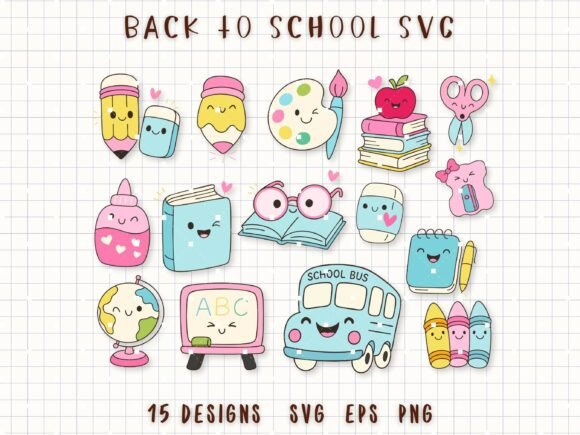
Minimalist Back to School Vector Element: Graphics & Illustrations
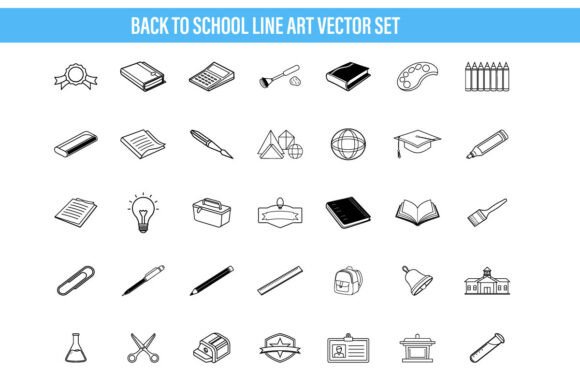
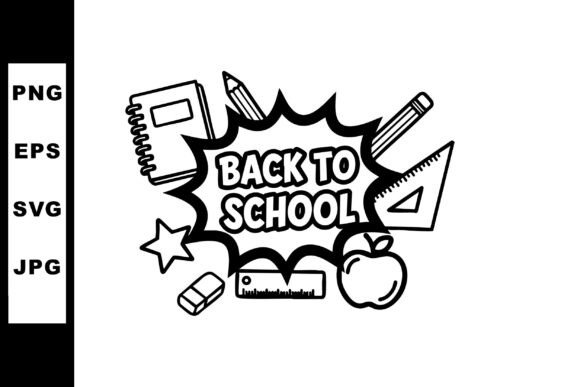
As a graphic designer who’s built brand identities for indie stationery labels, launched seasonal Etsy collections, and crafted social media visuals for local tutoring co-ops, I opened Minimalist Back to School Vector Element expecting clean utility—and found something more nuanced. This isn’t just clipart; it’s a quiet, confident visual cue. The classroom silhouette—a simplified chalkboard, stacked books, or a single desk with a pencil—carries gentle warmth without nostalgia overload. It reads as modern design, not retro cliché. That subtlety makes it viable for real client work where tone matters: think handmade business branding for a Montessori-inspired toy shop, or editorial design for a back-to-school blog series targeting mindful parents.
A First Impression That Sets the Right Tone
The mood is calm, intentional, and quietly optimistic—no cartoonish energy, no forced cheer. Lines are crisp but not rigid; negative space is generous. That breathability is essential when you’re layering this into a full brand system. For a client launching a line of organic cotton backpacks, this asset immediately supports a visual language rooted in simplicity, craftsmanship, and thoughtful education—not mass-market school supply chaos. It doesn’t shout; it invites attention through restraint.
Where It Shines in Real Client Projects
Minimalist Back to School Vector Element excels in contexts where clarity and emotional resonance matter more than decoration:
- Product mockups—especially for tote bags, mugs, and notebook covers—where its clean silhouette scales beautifully without pixelation;
- Social media graphics for Instagram carousels or Pinterest pins promoting study planners or printable checklists;
- Packaging design for small-batch stationery brands, where it functions as a subtle pattern repeat or a corner accent on kraft boxes;
- Canva templates and Cricut projects aimed at teachers or homeschoolers seeking cohesive, print-ready materials;
- Editorial design for newsletters or digital magazines covering learning tools, remote education, or child development;
- Sticker design and sublimation design for craft fairs or Etsy product listings—its SVG format ensures sharp edges at any size.
It also strengthens brand identity when used consistently across touchpoints: as a watermark on digital worksheets, a favicon for an educational resource site, or a recurring motif in email headers. Because it’s vector-based, it adapts seamlessly to both web and print outputs—critical for clients using print-on-demand services or launching limited-run merch.
Where to Use It Thoughtfully
This asset isn’t universally frictionless. Its minimalist nature becomes a liability in certain scenarios:
- Small sizes (under 40px height)—details like pencil tips or book spines blur or vanish;
- Crowded layouts, especially with dense typography or layered photography, where it risks visual noise rather than enhancement;
- Low-contrast backgrounds (e.g., light gray on off-white)—test contrast rigorously before finalizing;
- Professional corporate materials (e.g., university admissions brochures) that demand formal gravitas over approachable warmth;
- Brands built on ultra-minimalist aesthetics—if your client’s entire visual language uses only one line weight and zero decorative elements, even this subtle silhouette may feel like excess.
Design Judgment in Action: What I Tested Before Approving It
Before clearing Minimalist Back to School Vector Element for a recent client project (a printable planner line for high school counselors), I ran these checks:
- Converted it to black and white—confirmed legibility without color reliance;
- Placed it on light and dark mockups (matte paper, navy canvas tote, beige website hero)—verified contrast and presence;
- Zoomed to 400% and shrunk to 15%—assessed vector integrity and readability thresholds;
- Overlayed it with serif font (for editorial trust), sans serif font (for modern clarity), and handwritten font (for warmth)—noted how each pairing shifted perceived audience age and tone;
- Checked file formats: SVG for scalability, PNG with transparency for quick Canva integration, and confirmed commercial license coverage for resale in digital products;
- Printed test sheets on uncoated stock—verified crispness and ink bleed behavior.
That last step mattered: some “minimalist” assets lose definition in offset printing, but this held up cleanly—even at 8pt size on a product label.
Why It Fits the Creative Marketplace—Without Compromise
In a sea of overdesigned, cluttered design bundles, Minimalist Back to School Vector Element stands out by doing less—and doing it well. It’s not a shortcut; it’s a considered tool. For small business branding, it adds cohesion without dictating voice. For digital product creators, it’s production-ready: SVG-editable, commercially licensed, and context-aware. And for designers juggling tight deadlines and real budgets, it saves hours of custom illustration—without sacrificing authenticity.
If your next client project leans into intentionality—whether it’s a printable design for homeschool families, a t-shirt design for a teacher appreciation campaign, or marketing visuals for a literacy nonprofit—this graphic design asset earns its place. Not as filler, but as quiet confidence in visual form.